

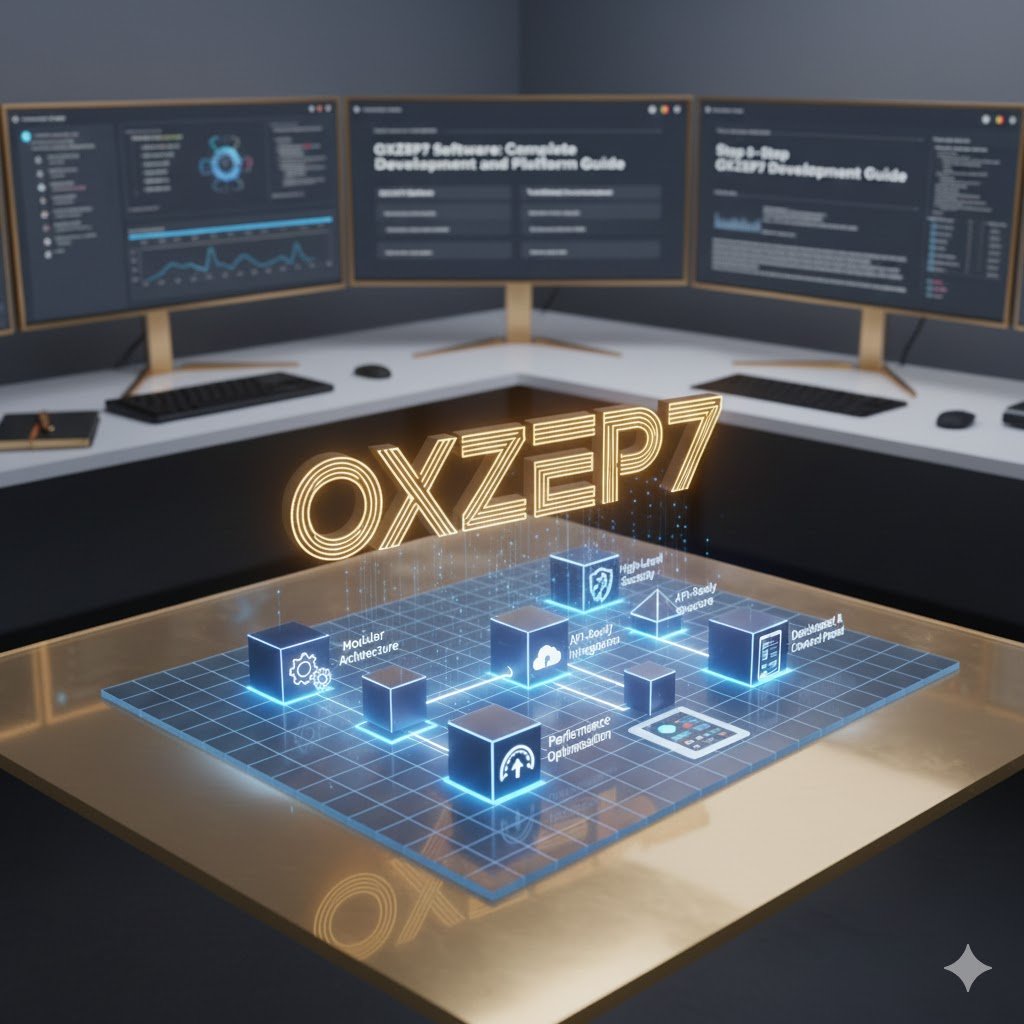
Developing OXZEP7 software requires a clear understanding of its architecture, features, development workflow, and deployment strategy. This guide explains how to develop OXZEP7 software from start to finish, including planning, designing, coding, testing, optimizing, and launching. It is written for beginners, software developers, SaaS founders, and tech learners searching for practical steps and professional insights.
OXZEP7 is considered a flexible, modular software framework that helps teams build powerful, scalable, and secure applications. Whether you want to create a SaaS tool, automation platform, internal business system, or custom digital product, this guide provides everything you need.
Use this complete resource to understand the oxzep7 software features, oxzep7 development guide, oxzep7 benefits, and the full process of how to build oxzep7 properly.
What Is OXZEP7 Software?
OXZEP7 is a modern software architecture model and development approach designed for building high-performance applications. Developers use OXZEP7 to create modular, secure, and scalable systems that can integrate with APIs, databases, cloud services, and automation tools.
It focuses on:
- Efficient coding practices
- Scalable infrastructure
- Strong security standards
- Easy integrations
- Optimized user experience
OXZEP7 is ideal for teams building SaaS products, custom apps, enterprise platforms, and workflow automation systems.
Why Develop OXZEP7 Software?
Developing OXZEP7 software helps founders and developers move faster, reduce errors, and deliver stable products. Here are the major reasons:
- Faster development speed through modular design
- Reduced maintenance time due to reusable components
- Better scalability for growing platforms
- Strong security for sensitive applications
- Lower development costs over time
- Higher reliability and performance
- Smooth deployment across devices and environments
OXZEP7 Software Features
Below are the core features that define the OXZEP7 system.
Modular Architecture
- Components can be reused in different parts of the application
- Easier maintenance and upgrades
- Reduces code duplication
High-Level Security
- Encrypted data handling
- Role-based access
- Strong authentication and authorization
API-Ready Integration
- Supports REST and GraphQL
- Easy connection with payment gateways
- Smooth integration with third-party systems
Cloud-Native Structure
- Works with containers and serverless deployments
- Reduces server cost
- Improves application uptime
Performance Optimization
- Built-in caching
- Fast execution speed
- Optimized database operations
Dashboard & Control Panel
- Visual interface for management
- Easy monitoring of analytics, logs, and performance
Step-by-Step OXZEP7 Development Guide
This section explains exactly how to develop OXZEP7 software from planning to deployment. Each step is simple, clear, and beginner-friendly.
Phase 1: Planning and Requirements
Define Project Purpose
Before building, understand what the software will do.
Ask questions such as:
- What problem will the platform solve?
- Who is the target user?
- What features are required?
- What is the expected performance level?
Create Functional Requirements
Examples:
- User registration and login
- Dashboard for management
- API integrations
- Reporting and analytics
Choose Technology Stack
Common OXZEP7 stack options include:
- Frontend: React, Vue, Angular
- Backend: Node.js, Python, PHP, Java
- Database: MySQL, PostgreSQL, MongoDB
- Cloud: AWS, Azure, GCP
- DevOps: Docker, Kubernetes, CI/CD tools
Phase 2: Architecture & System Design
Design the OXZEP7 Architecture
The architecture typically includes:
- Core engine
- Modular components
- Database layer
- API layer
- Frontend layer
- Security layer
- Admin panel
- Logging and monitoring system
Create Wireframes and UI Mockups
Visual planning helps reduce development mistakes.
Include:
- User interface flow
- Dashboard layout
- Forms and input fields
- Navigation structure
Plan Integration Systems
Identify:
- Payment processing
- Authentication systems
- Notification services
- External apps
Phase 3: Backend Development
Build the Core OXZEP7 Engine
The engine handles:
- Business logic
- Data processing
- API routing
- Security rules
Set Up Database Structure
Steps:
- Choose the database (SQL or NoSQL)
- Create tables with indexes
- Define data models
- Establish relationships
- Set up backup rules
Develop API Endpoints
APIs allow data communication.
Include:
- GET endpoints for reading
- POST endpoints for creating
- PUT endpoints for updating
- DELETE endpoints for removing
Apply Security Standards
- Input validation
- Token-based authentication
- Password hashing
- Server-level encryption
Phase 4: Frontend Development
Build User Interface
Use simple, responsive designs.
Key features:
- Clean dashboard
- Easy navigation
- Mobile-friendly layout
Connect Frontend to Backend
Steps:
- Set up API calls
- Manage state
- Display real-time data
- Handle user inputs
- Validate forms
Add User Experience Enhancements
- Tooltips
- Quick actions
- Fast-loading pages
- Error and success messages
Phase 5: Testing OXZEP7 Software
Testing ensures your software is reliable.
Unit Testing
Tests individual functions to avoid code failures.
Integration Testing
Ensures different modules work together properly.
Performance Testing
Evaluates:
- Loading time
- CPU usage
- Memory usage
Security Testing
Checks:
- Vulnerabilities
- Access control
- Data protection
User Acceptance Testing
Real users test the platform before launch.
Phase 6: Deployment and Launch
Prepare Deployment Environment
- Choose cloud provider
- Configure servers
- Set up load balancing
- Apply SSL certificates
Set Up CI/CD Pipeline
Automates:
- Build process
- Testing
- Deployment
- Version control
Launch OXZEP7 Software
Steps:
- Upload production files
- Apply database migrations
- Run final security checks
- Release to users
Comparison Table: OXZEP7 vs Traditional Software Development
| Feature | OXZEP7 Software | Traditional Development |
|---|---|---|
| Architecture | Modular | Monolithic |
| Scalability | High | Moderate |
| Performance | Optimized | Average |
| Security | Advanced built-in layers | Requires manual setup |
| Development Speed | Fast | Slower |
| Integration | Easy API integration | Limited without custom work |
| Cost Efficiency | Long-term cost savings | Higher long-term costs |
| Maintenance | Simple and clean | Complex and time-consuming |
Benefits of Building OXZEP7 Software
Scalability
Applications can grow without rewriting the system.
Modular Structure
Developers can reuse components to reduce time and cost.
Better Performance
Fast load speed improves user experience.
Improved Security
Strong encryption and authentication built into the framework.
Future Proof
Supports cloud, automation, microservices, and modern app development needs.
How to Build OXZEP7 Software: Quick Summary Checklist
- Define project goals
- Choose technology stack
- Design system architecture
- Create database structure
- Develop core backend logic
- Build user interface
- Integrate all modules
- Test for performance and security
- Deploy using CI/CD
- Monitor and improve
FAQs About Developing OXZEP7 Software
What skills are required to develop OXZEP7 software?
Basic programming skills, backend knowledge, frontend understanding, and familiarity with APIs and cloud systems.
How long does it take to develop OXZEP7 software?
Depending on features, it can take 30 to 180 days.
Is OXZEP7 suitable for SaaS applications?
Yes. Its modular and scalable structure is ideal for SaaS platforms.
Can beginners build OXZEP7 software?
Yes. With clear guidance and a structured approach, beginners can start creating smaller projects.
Does OXZEP7 support mobile apps?
Yes. The backend can connect with mobile applications through APIs.
Conclusion
Developing OXZEP7 software is a powerful way to create fast, scalable, and secure applications. With its modular architecture, integrations, and cloud-friendly structure, it helps developers build modern platforms effectively. By following this step-by-step guide, you can confidently plan, design, build, test, and launch a complete OXZEP7 system.
